Tuttlingen new Music Garden
Bachelor Project: The Music Garden Concept
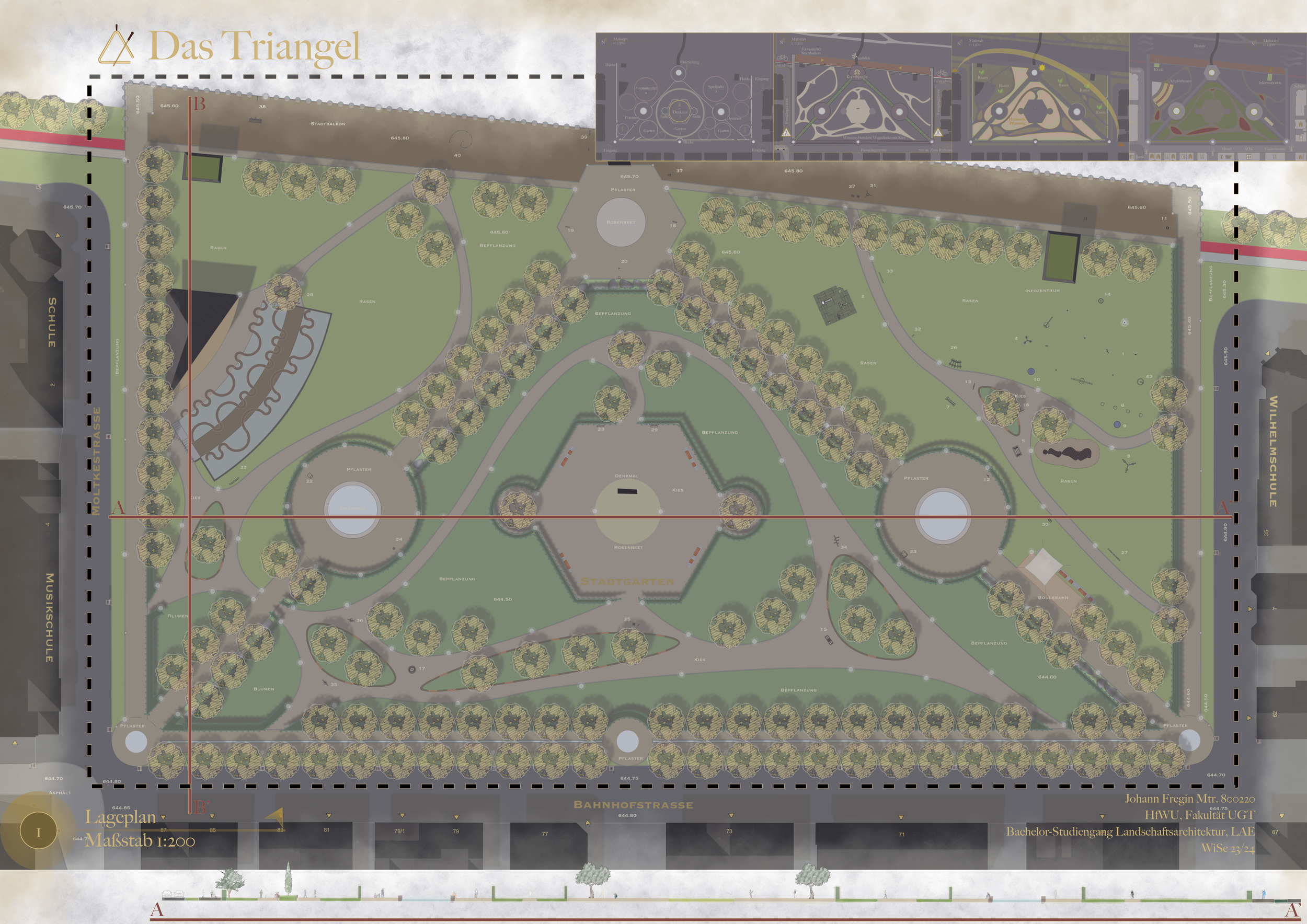
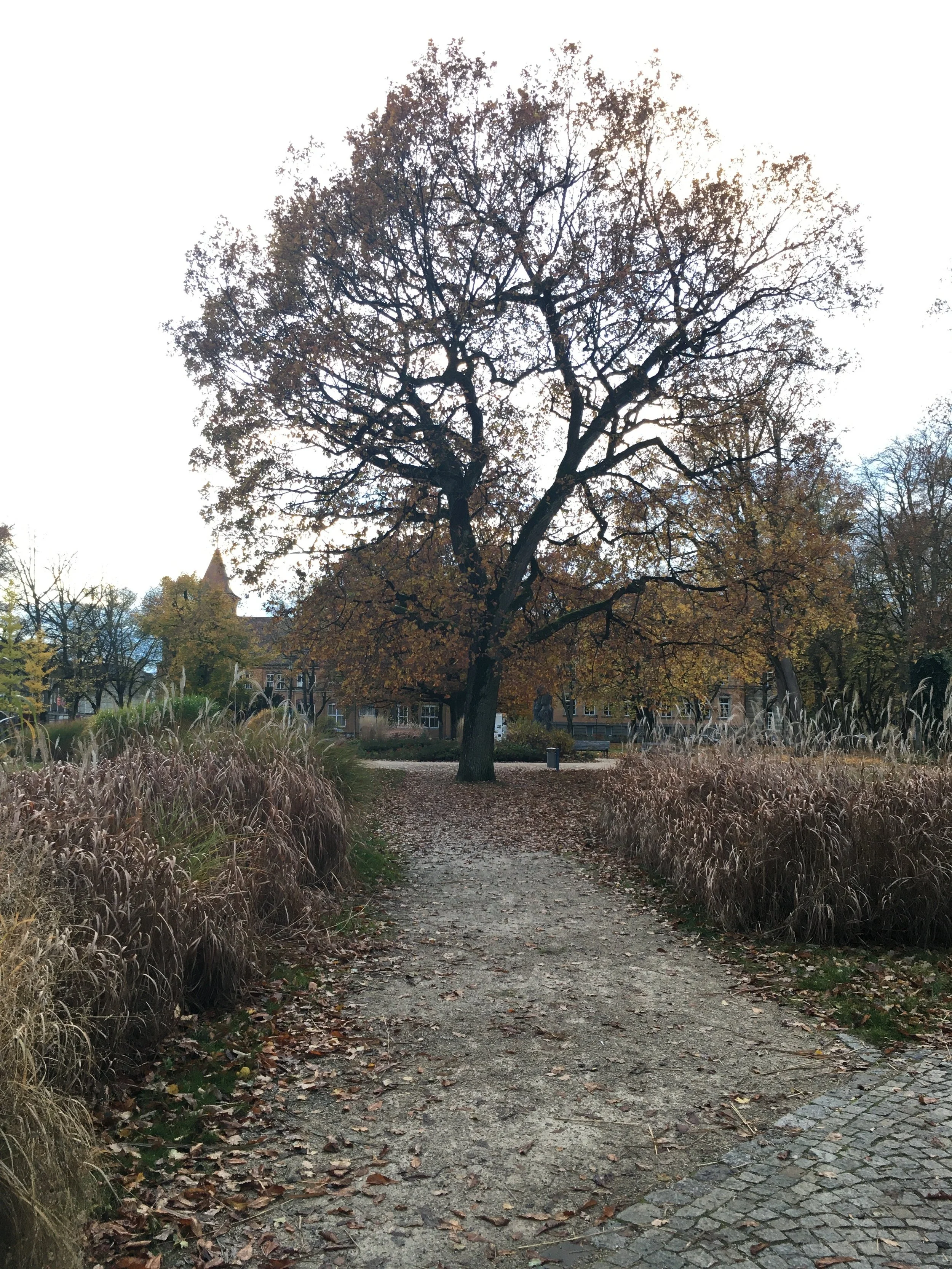
My bachelor project explores the redesign of the historic urban garden in Tuttlingen, transforming it into a contemporary public space that connects landscape architecture with musical principles. The design is inspired by the idea that space can be experienced similarly to music, through rhythm, harmony, and movement.
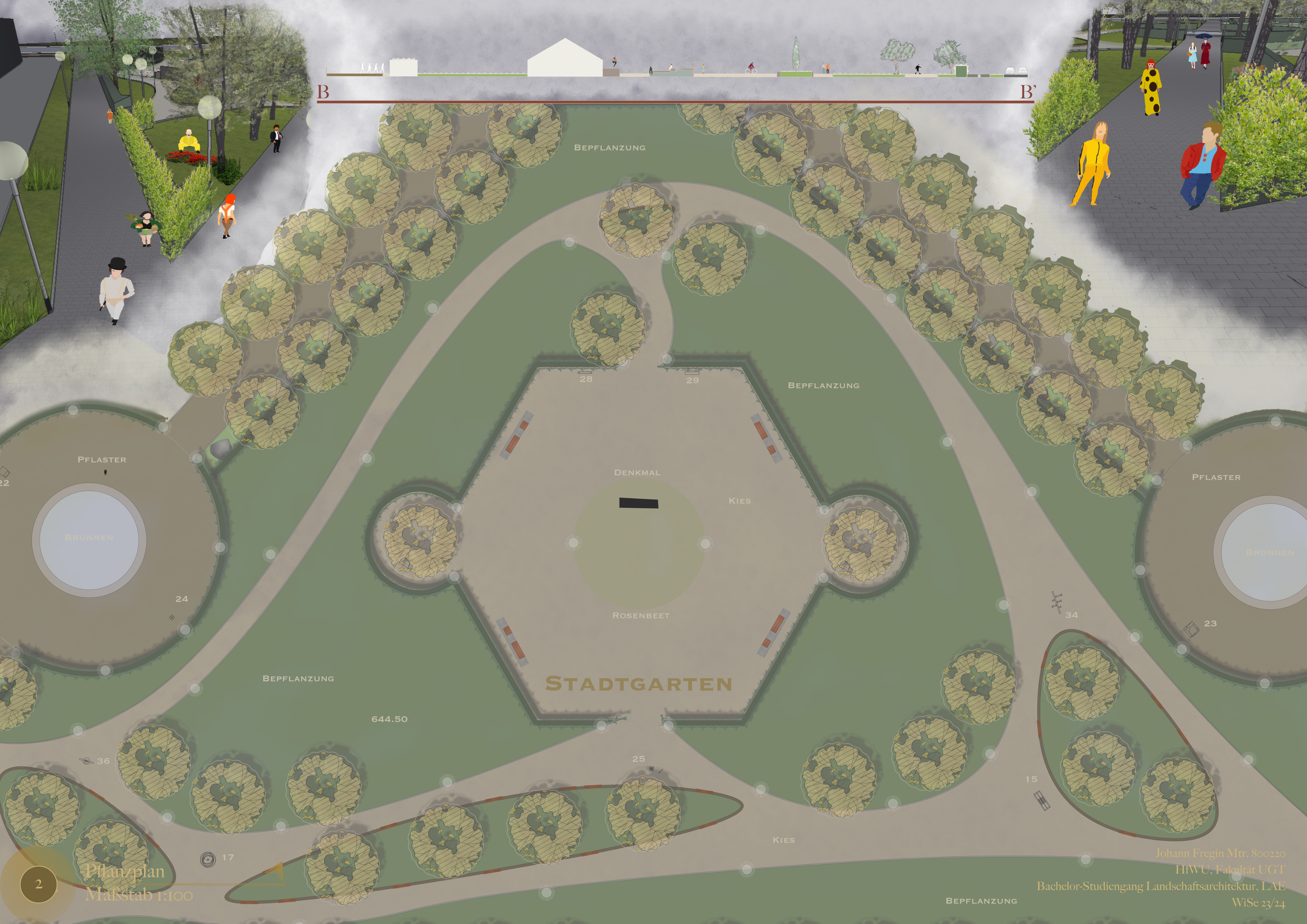
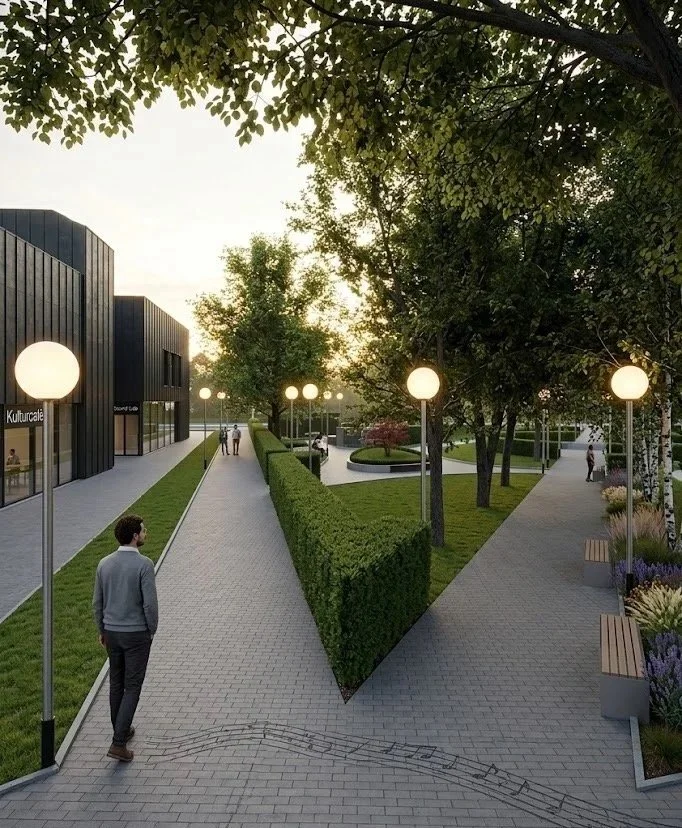
At the core of the concept lies the reinterpretation of the garden as a “music garden”, where spatial sequences, geometries, and atmospheres reflect musical structures. Influenced by precedents such as the Toronto Music Garden, the design translates musical harmony into physical form. Paths, open spaces, and vegetation are arranged like a composition, guiding visitors through different “movements” of the par, ranging from active and social areas to quiet, more contemplative zones.
A central design element is the integration of geometric principles derived from musical ratios. The triangular path system organizes circulation and divides the park into distinct zones, creating a clear yet dynamic spatial structure. This geometry not only ensures stability and orientation but also symbolizes harmonic relationships found in music.
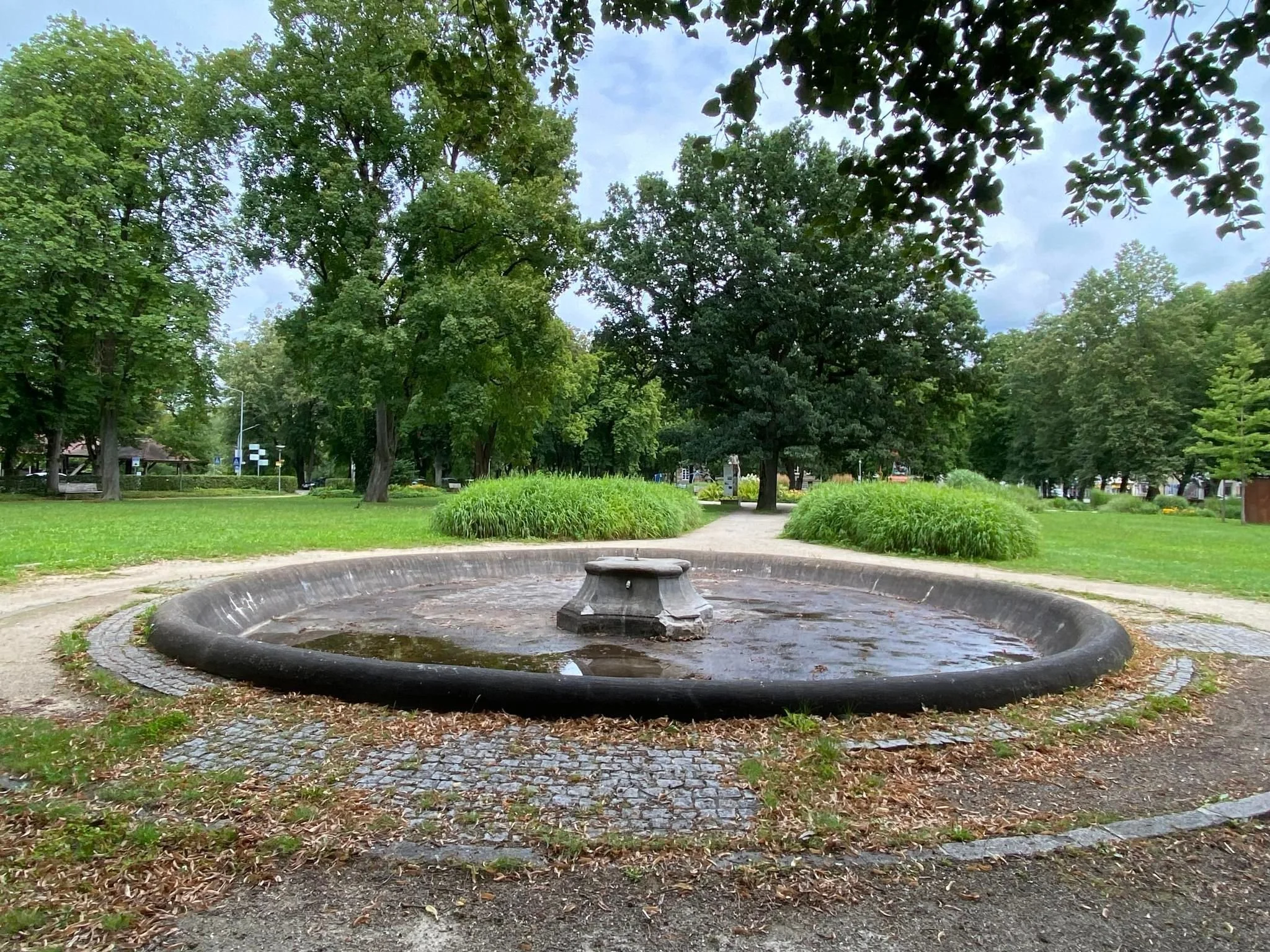
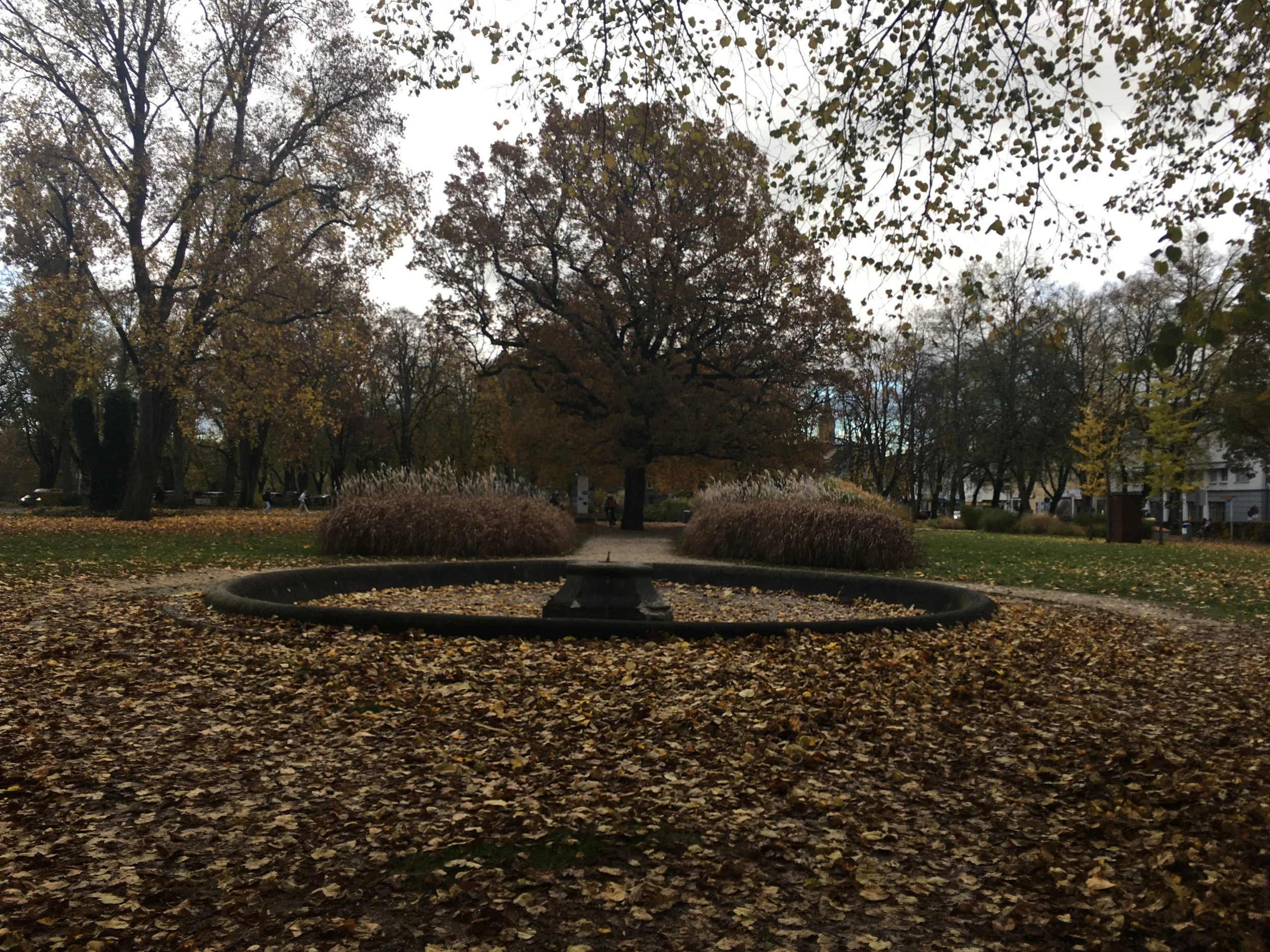
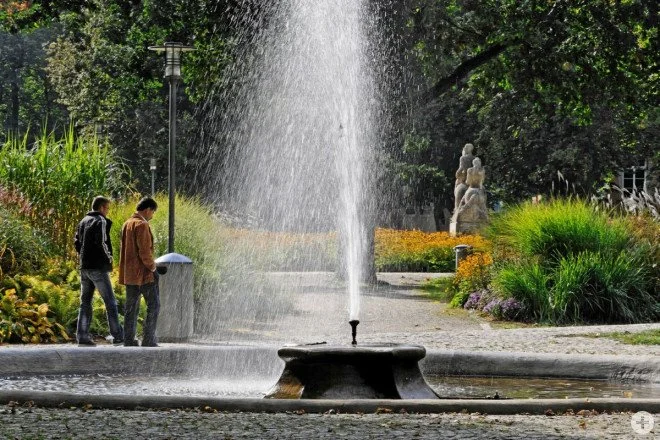
The two existing fountains play a key role in the design. Originally outdated and in need of renovation, they are reimagined as focal points within the garden. Their circular form contrasts with the triangular path network, creating a dialogue between different geometries, similar to contrasting tones in a musical composition. Positioned along the main circulation routes, the fountains act as spatial anchors that slow down movement and encourage pause and interaction.
Beyond their formal role, the fountains contribute significantly to the sensory experience of the garden. The sound of flowing water introduces an acoustic layer to the space, reinforcing the overall concept of the garden as a place where music is not only represented visually but also experienced physically. Seating areas around the fountains invite visitors to rest, observe, and engage with the environment, enhancing the garden’s function as a social and recreational space.
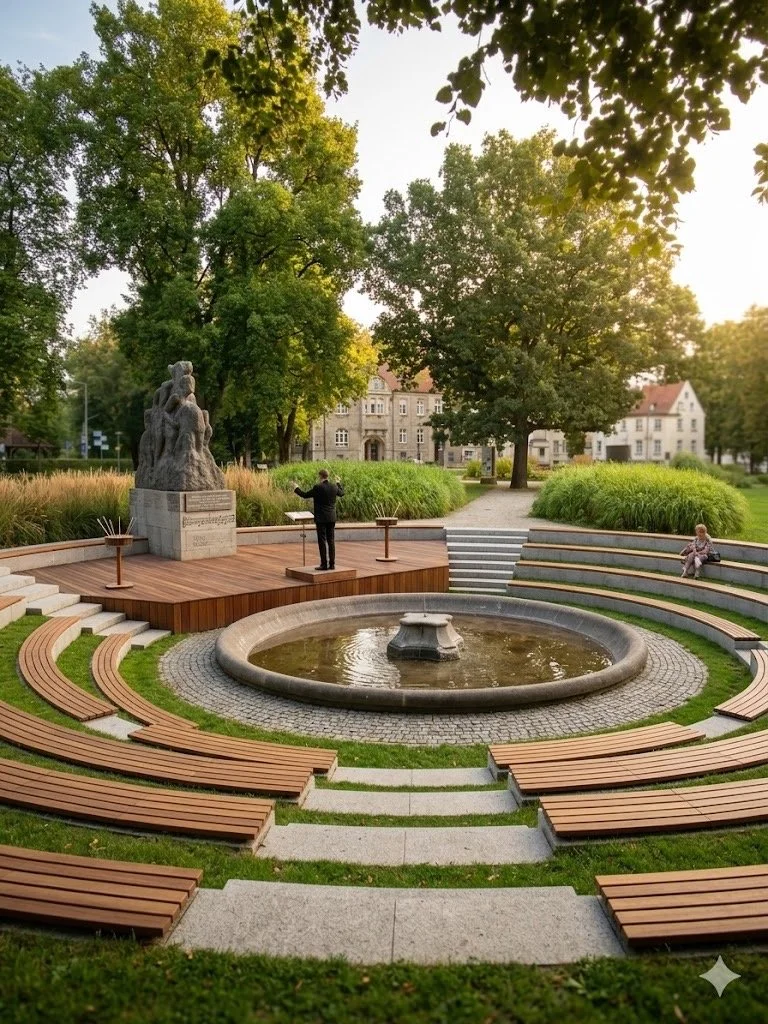
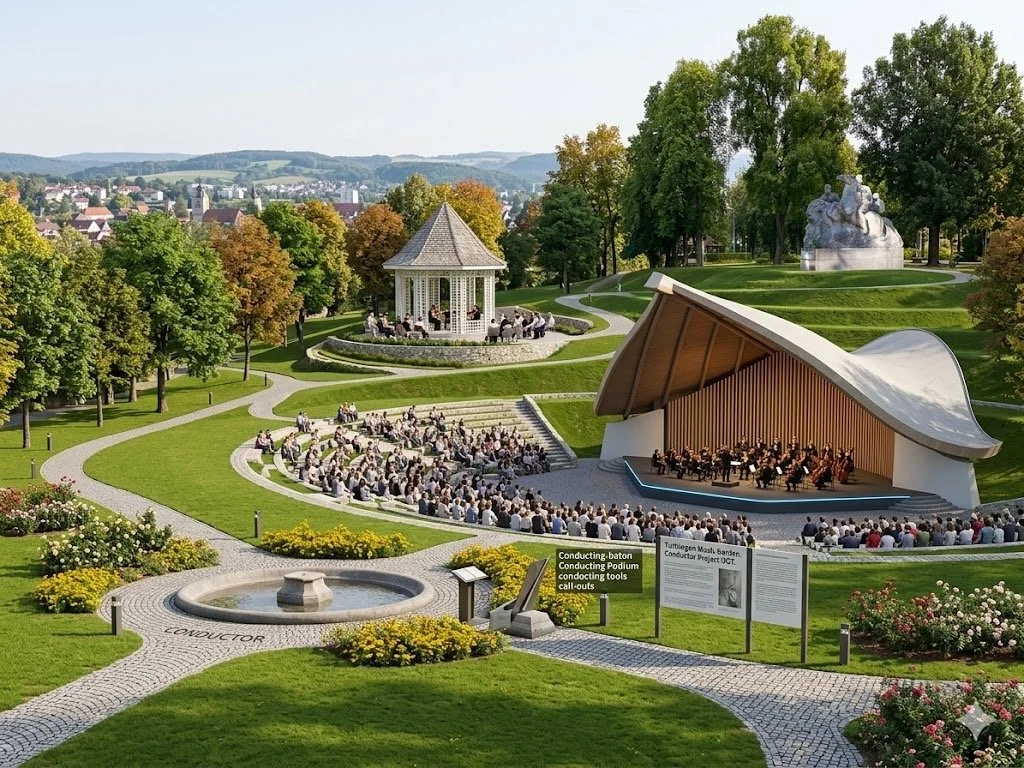
The music garden concept extends further through the inclusion of cultural elements such as an amphitheater and interactive installations. These features create opportunities for performances, informal gatherings, and artistic expression, strengthening the connection between landscape, community, and culture.
Overall, the project aims to redefine the urban garden as a vibrant, multifunctional space that combines ecological, social, and cultural values. By merging music and landscape architecture, the design creates a unique identity for the site, one that resonates with both the history of the place and the needs of contemporary urban life.
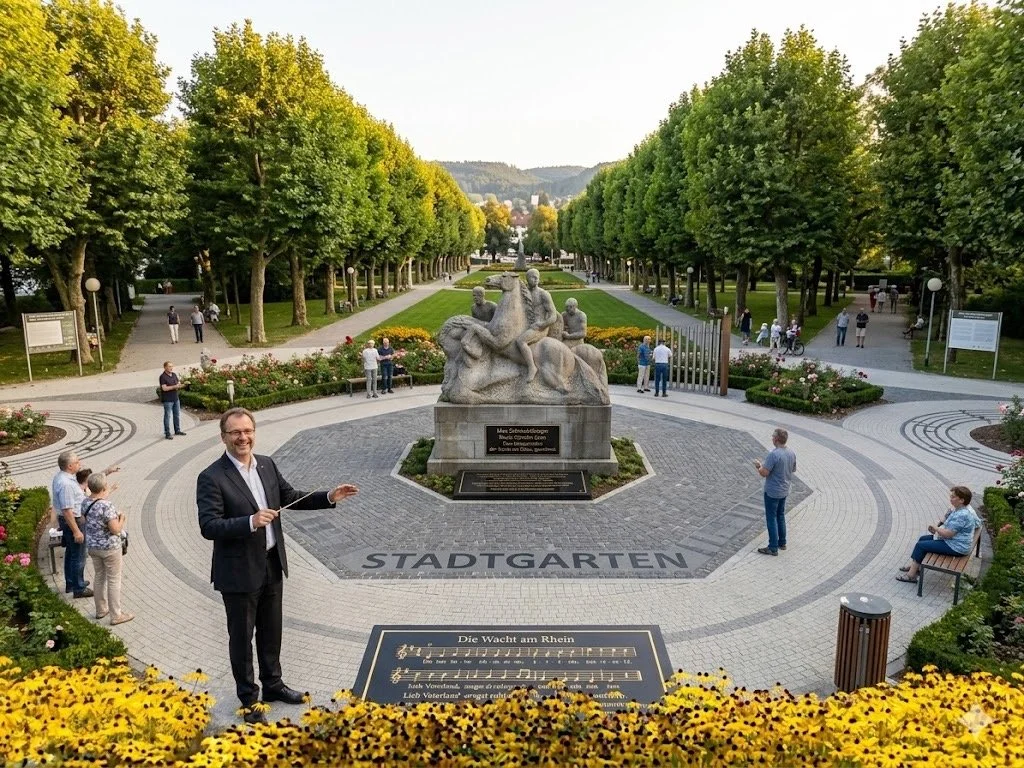
In addition to traditional design methods, artificial intelligence was used to generate visualizations of the project. While these AI generated images provided quick and expressive impressions, they proved to be less precise compared to workflows using AutoCAD / Vectorworks in combination with Photoshop. As a result, certain landscape elements were not represented exactly as intended. However, the strength of these visualizations lies in their ability to convey atmosphere and emotion. Rather than serving as exact technical representations, they function as conceptual simulations that communicate the overall idea and spatial feeling of the design.